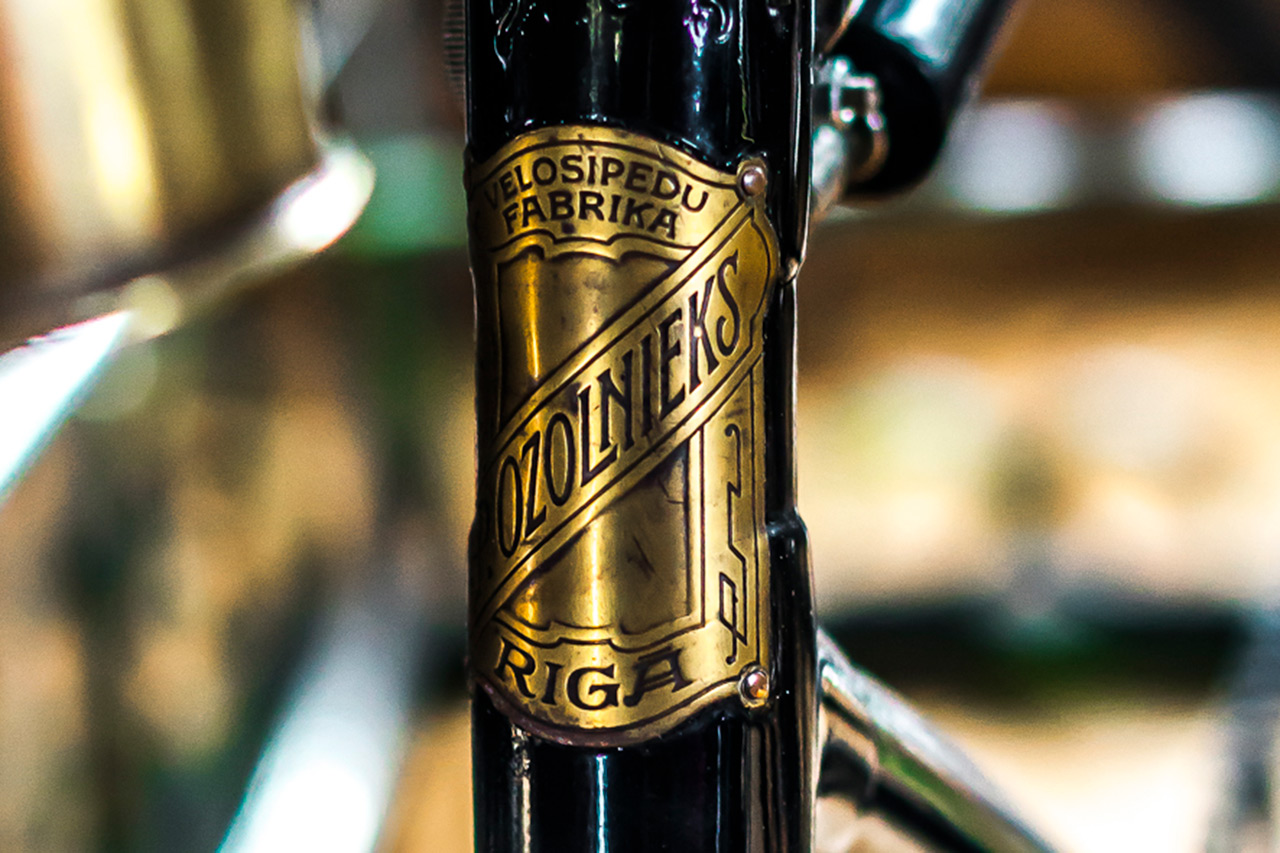
Pēteris Ozolnieks’ Factory in Riga, 1895–1940
In 1894, P. Ozolnieks founded a small mechanical workshop at 33 Aleksandra Street (now Brīvības Street), where he began repairing various mechanical devices, including bicycles.
1895. In [year], P. Ozolnieks decided to start manufacturing bicycles in his workshop as well and received permission to open a bicycle factory.
In 1899, P. Ozolnieks traveled to Germany’s industrial centers. For more than a year, he worked at various German bicycle factories and taught technical courses to gain specialized knowledge and improve his skills.
Upon returning to Riga, P. Ozolnieks obtained a bank loan, purchased a plot of land at 20 Pēterburgas Highway, and expanded his existing factory.
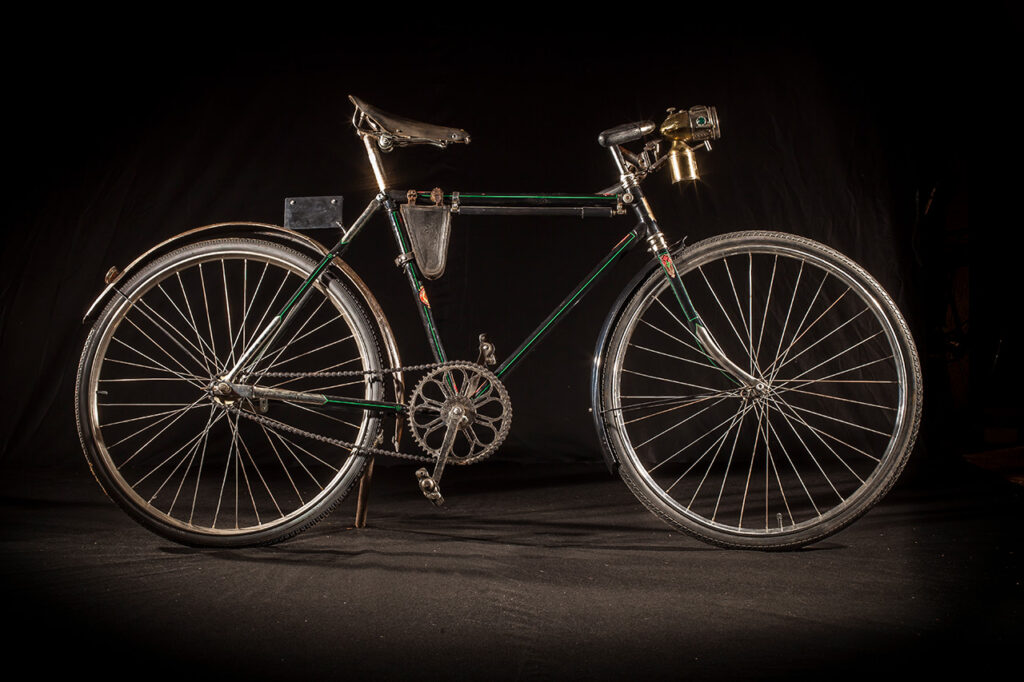
By the time of World War I, P. Ozolnieks’ flagship bicycle model, the “Mars,” had become a well-known brand throughout the Baltic States and brought the company great prestige. These bicycles differed from those produced by other factories in their sturdy construction, long frame, and smooth, comfortable ride.
1915. In that year, due to the approach of German troops toward Riga, the factory had to be evacuated to Moscow, but there is no information about the production of Ozolnieki bicycles in Moscow.
After World War I, in 1921, P. Ozolnieks’ bicycle factory resumed operations in Riga. However, regaining pre-war production levels proved to be a significant challenge. Bicycle manufacturing technologies had not changed from those used before the war. Although the bicycles were still relatively heavy and gave the impression of being clunky, they nevertheless won the trust of rural residents in particular thanks to their exceptional durability and safety. In the 1920s, P. Ozolnieks won top prizes at several exhibitions for the sturdy construction and quality of his bicycles: In 1923, at the Kuldīga exhibition, the bicycles were awarded the Grand Prix, and in 1926, in Jelgava, they received the Cross of Honor. Thanks to these successes, P. Ozolnieks named his bicycles “Grand Prix.”
By 1939, P. Ozolnieks’ bicycle factory had already become one of the largest bicycle manufacturers in Latvia—from 1921 to 1940,
With the establishment of Soviet rule in Latvia, P. Ozolnieks’ factory ceased operations in the summer of 1940.