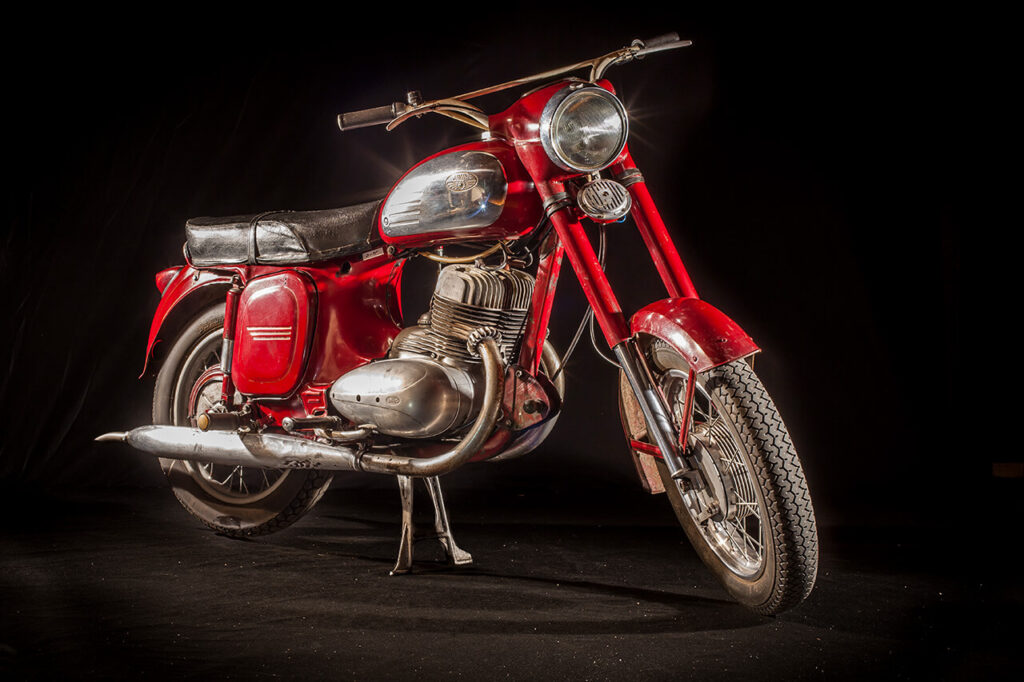
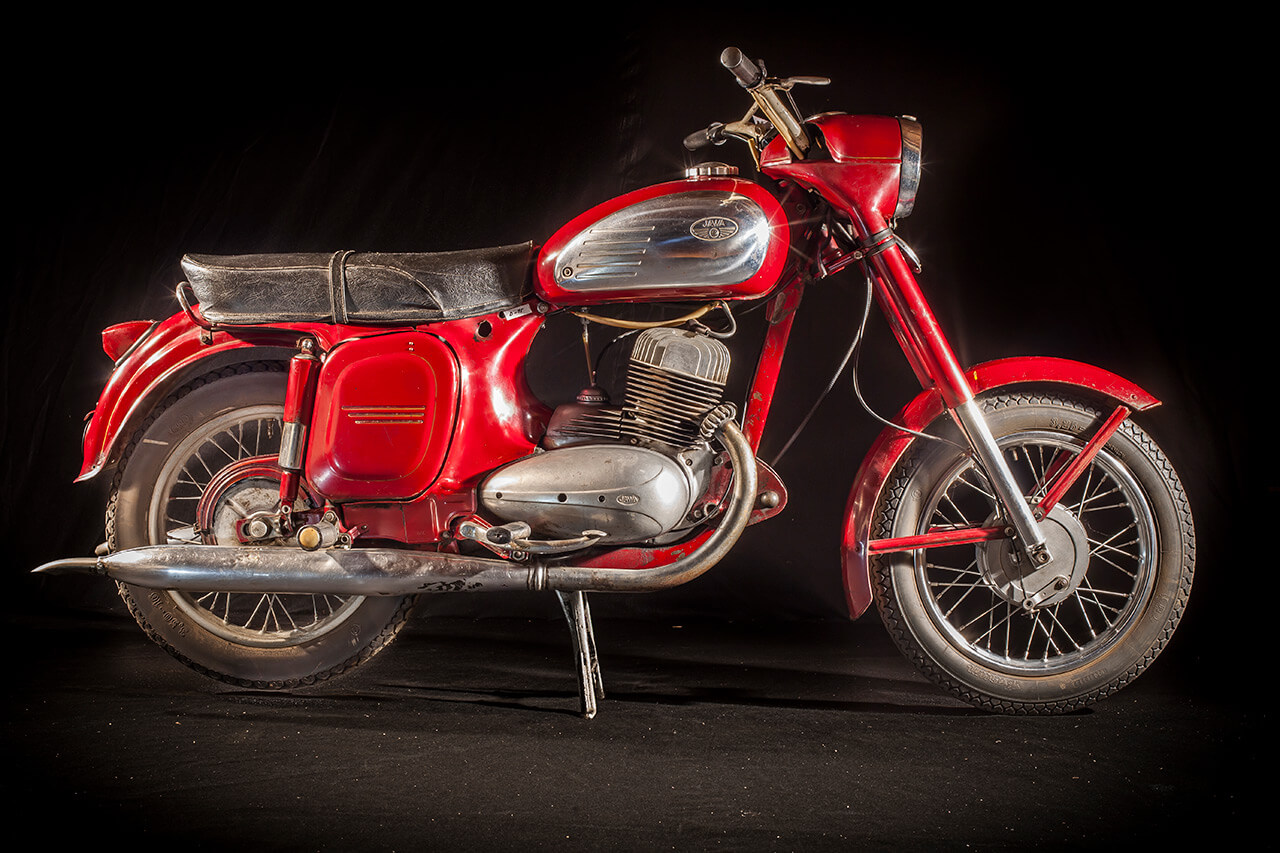
1948. In that year, a “Peraka” model with a two-cylinder 350 cm³ engine was introduced. 1953. In that year, the entire model lineup was significantly modernized: swingarm suspension, chain guards, two-up seats—this is the Jawa that could also be found here during the Soviet era. The Jawa motorcycle brand became known throughout the world, with motorcycles exported to 112 countries. 50. In the middle of the year, the JAWAs entered the Soviet Union.
At the time, both sides were very satisfied. Fans of Soviet-era motorcycles gained access to modern, world-class motorcycles that were very different from Russian-made models and other war-trophy bikes. This motorcycle, surprisingly responsive, combined a previously unseen liveliness, reacting sensitively to the slightest twist of the throttle, and stood out for its enviable durability, even on the roads of that era. How many young people, thanks to the “Jawa,” discovered the joy of conquering the open road and savoring the fresh morning breeze—that sense of freedom that only a motorcycle can provide. What a discovery the “Jawa” motorcycle was for tourists—it was precisely the appearance of this motorcycle that sparked the massive development of motorcycle tourism in the country. Many still consider this model to be ideal and, in any case, the best that Jawa has ever produced.