Following the success of the Mercedes-Benz 170, a new family car with a larger engine (6-cylinder) was developed. 1936. In October of that year, 2.3-liter engines began to be installed on the “long” 200 model chassis, creating one of the most popular mid-range Mercedes models of the 1930s. From 1936 to 1941, 19,324 units were produced with seven different body styles.
The most popular of these was the classic 4-door sedan body style with a separate, rounded, streamlined trunk, which many middle-aged people remember from the Soviet-era film *Seventeen Moments of Spring*, in which the Soviet spy “Standartenführer” Stirlitz (played by actor Vyacheslav Tikhonov). For this reason, vintage car enthusiasts in the former USSR still recognize the 230 /W143/ model by its nickname—“Stirlitz.”
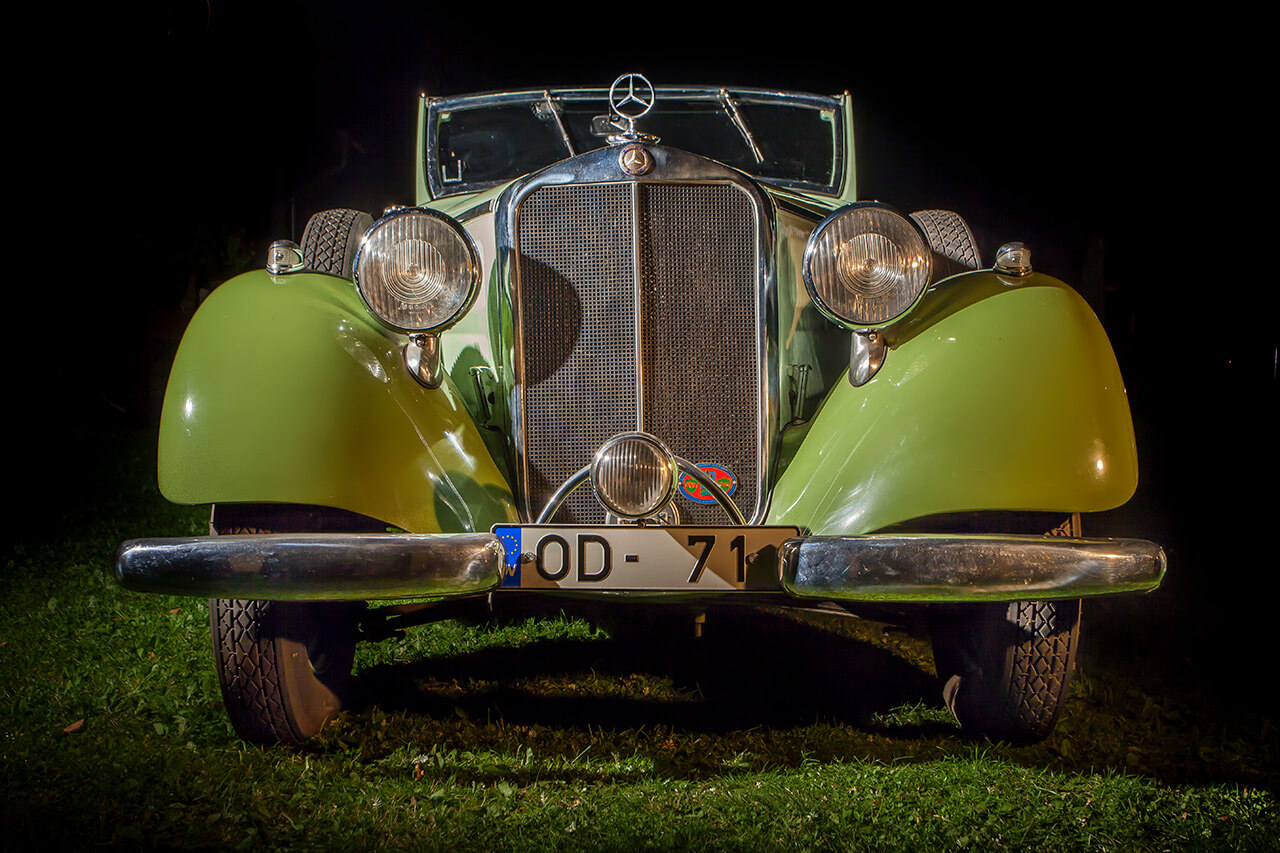
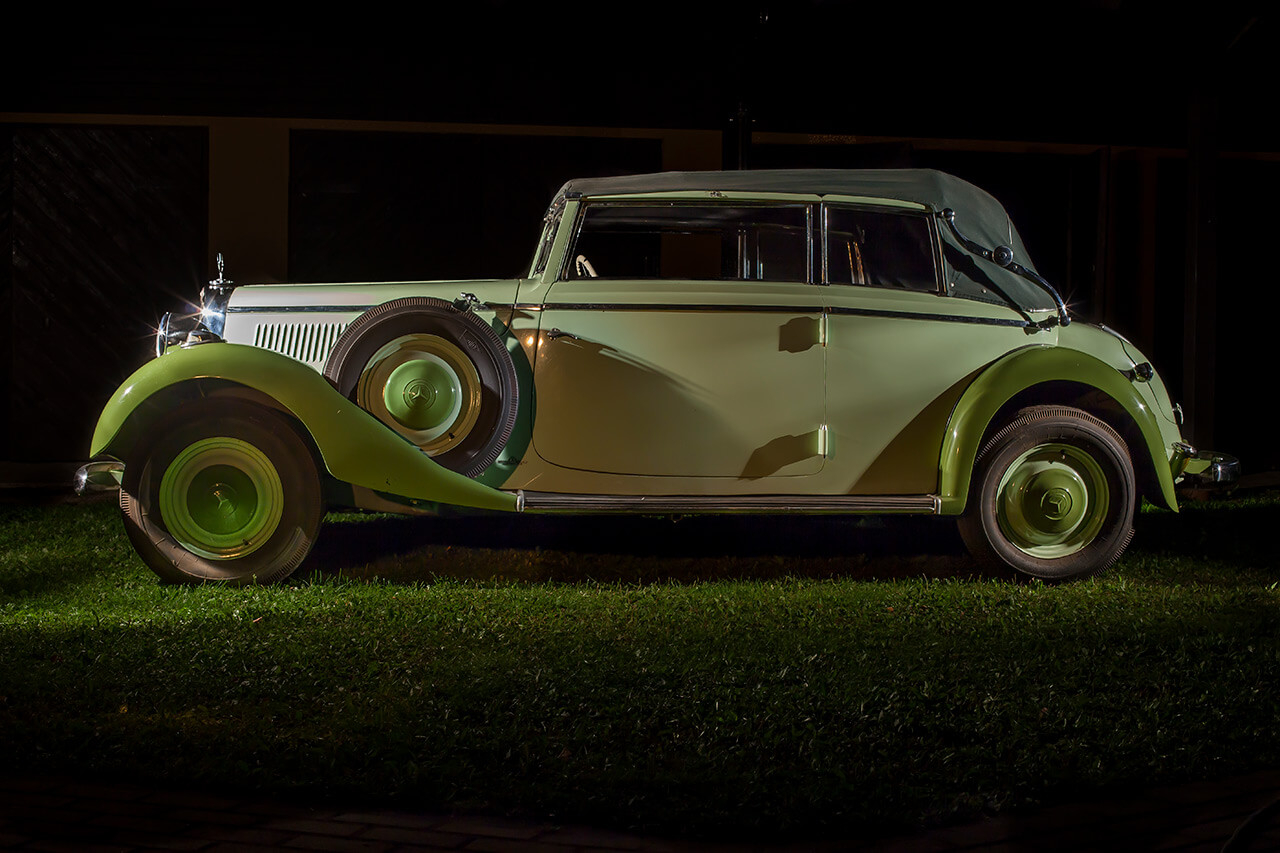
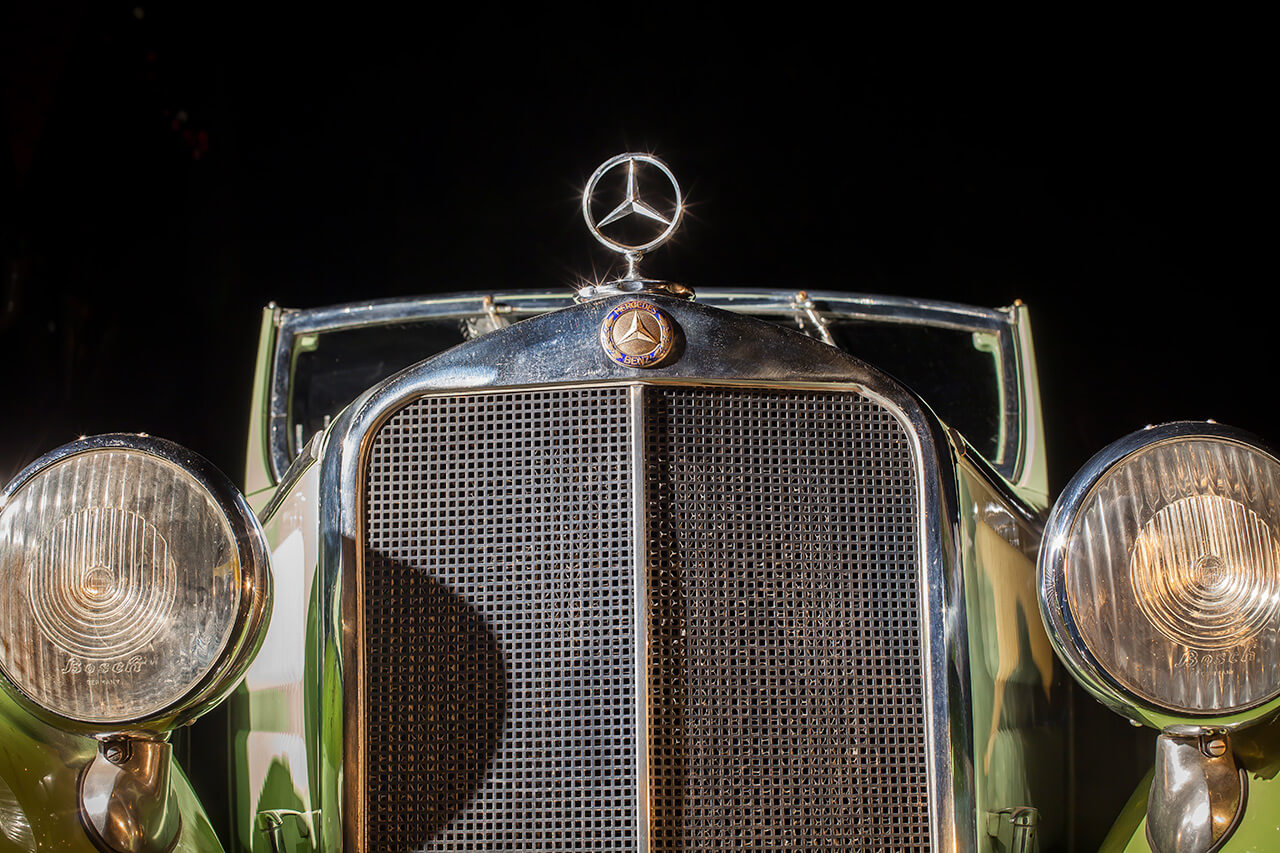
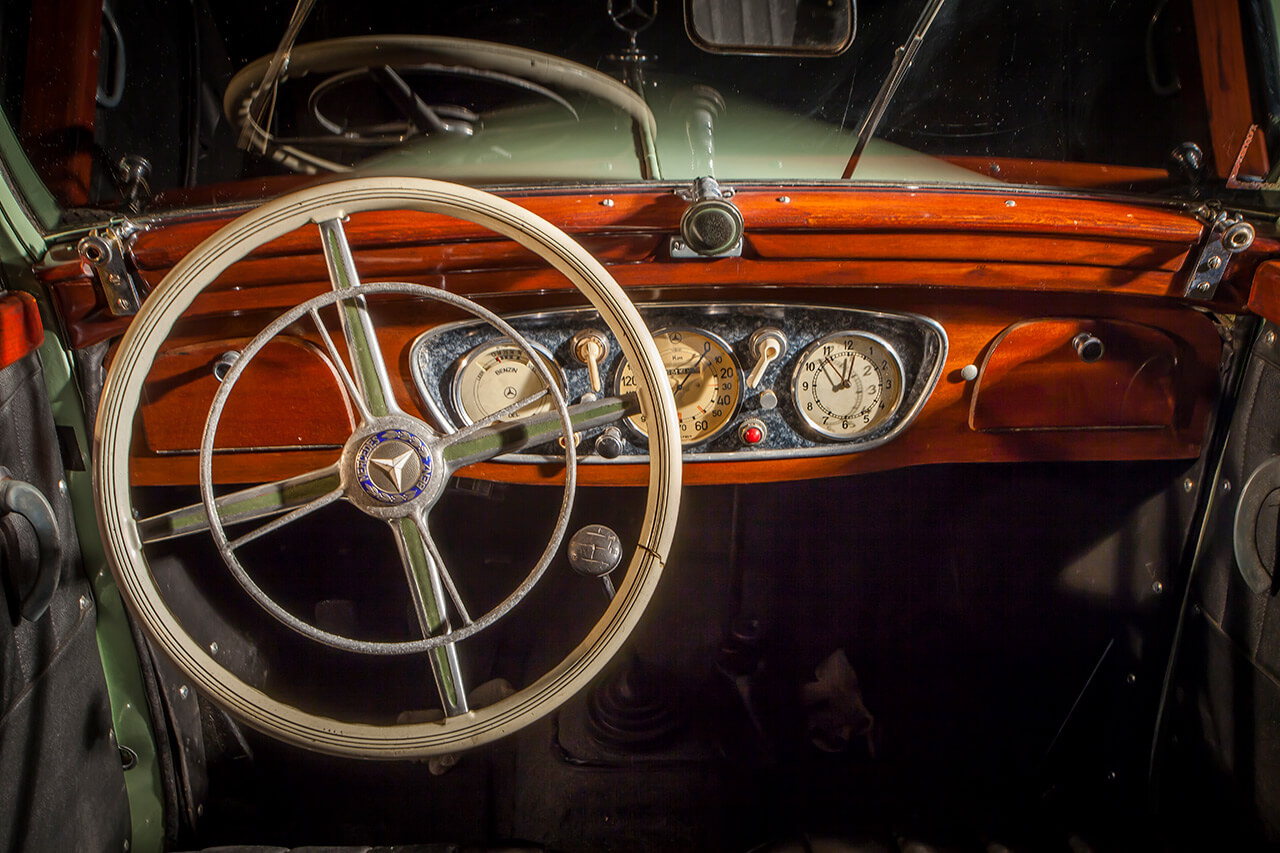
The new car featured innovative design concepts—a square frame, independent suspension, and hydraulic brakes on all four wheels—which set new standards for driving comfort and safety. It was available at a competitive price for its time. It should be noted that the elegant two-door, four-seat B-class convertible (according to the “Mercedes” body classification) on display at the museum is a very rare example today. It was restored in 2004.